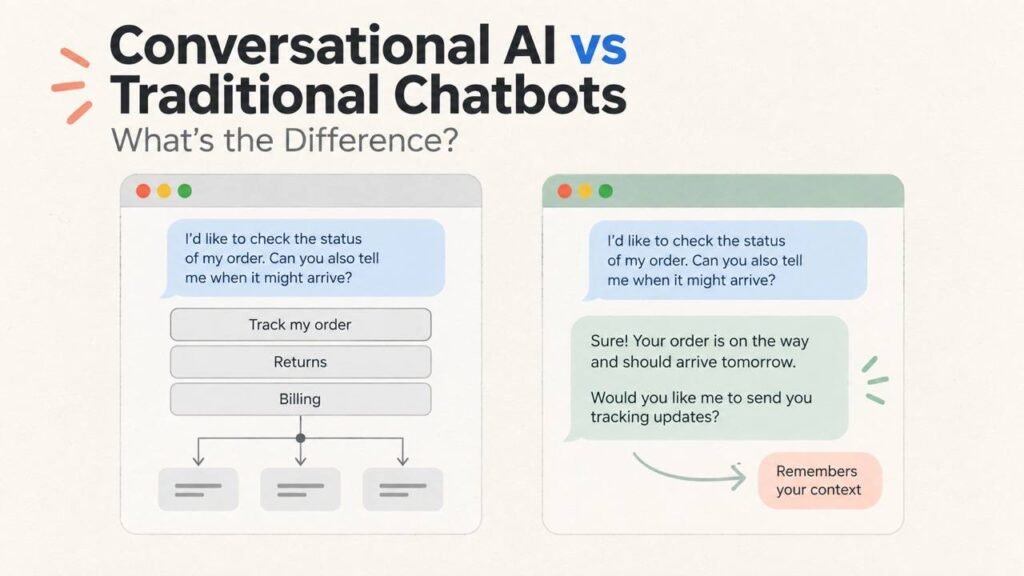
A customer asking “Can I change my delivery address?” sounds like a basic chatbot query at first. But add another sub-query to this, stating, “The package has already been shipped, and I’m moving tomorrow.” Now, the question doesn’t look like something a bot can actually answer, as the intent, context, and potentially the action required have changed altogether. This is what has created a completely different perspective for how users are viewing digital assistants now.
Besides, with Gartner reporting that 71% of customers now use a completely different research technique due to GenAI, businesses need to look beyond the traditional chatbot concept.
Source: ChatGPT
Having said that, this guide will further explore conversational AI vs traditional chatbots to help you understand how intelligent assistance has shifted over the years.
How Does Each Technology Work?
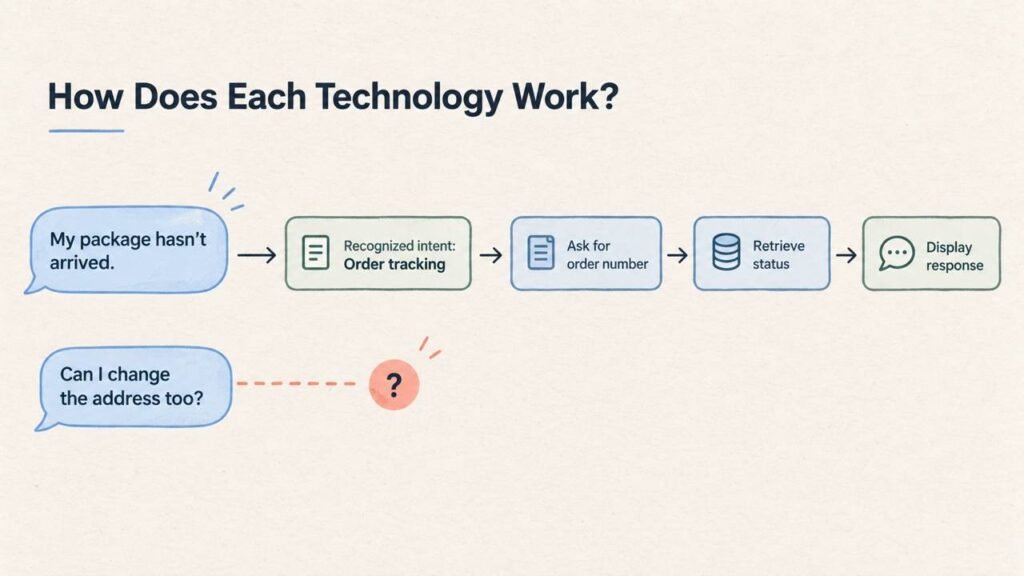
Think about what happens when a customer types, “My package hasn’t arrived. Can you check what’s going on?” With a traditional chatbot, the system will immediately start looking for a recognized intent, like order tracking.
Let’s assume that the message matches an existing rule that was pre-configured within the system. If that’s the case, the bot will automatically follow the programmed path, with no further analysis. This means the bot will ask for the order number, retrieve the status, and display the relevant response.
The experience works smoothly till the time the conversation takes a turn that the developer didn’t anticipate. A question about a delayed package, changing the delivery address, or combining two requests can push the user outside the predefined flow.
Source: ChatGPT
Conversational AI takes a less rigid route. It doesn’t search for a script that might match the question. Instead, the model interprets what the customer is trying to accomplish through the query or prompt. It can then:
- Use previous messages to gain context
- Fetch information from an order management system
- Apply necessary business rules
- Formulate a response that justifies the situation.
Now, suppose the customer follows up with, “It says delivered, but I don’t have it.” What the system will do is connect that statement to the same order rather than treating it as an entirely new question.
Hence, the difference comes down to how the system handles uncertainty. Traditional chatbots follow the path you designed. Conversational AI can work through interactions you did not explicitly script.
Context, Learning & Multi-Turn Conversations
You can never test a chatbot’s learning or context analysis capability simply by asking it one question. Instead, it’s what happens when the customer asks a second question without repeating anything from the previous interaction.
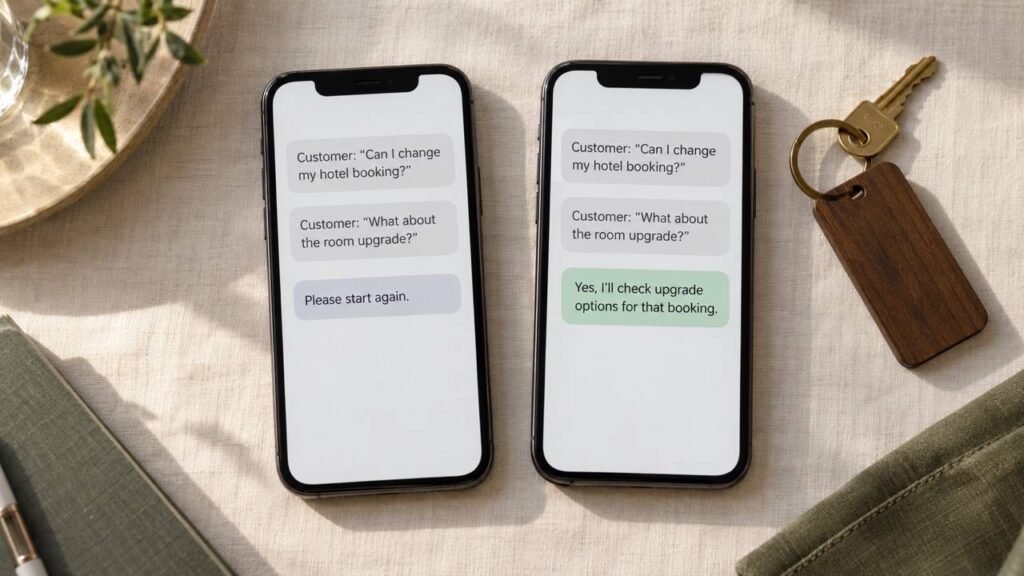
A traditional chatbot for small businesses generally has limited conversational memory. Suppose a customer asks, “Can I change my hotel booking?” at first. Out of the blue, the conversation follows a second query, “What about the room upgrade?”
Source: ChatGPT
If this request isn’t mapped to the same conversation path, the bot will end up asking the customer to start over or select another option. Its “learning” is also developer-driven. This means that new responses and scenarios have to be added to the underlying rules or knowledge repository.
Conversational AI can, however, maintain context across multiple turns. It understands that the “room upgrade” refers to the booking discussed moments earlier, rather than treating it as an unrelated request. With the right memory architecture, it can also use relevant information from previous interactions, like account details, preferences, or an earlier support case.
Here’s a catch! Context retention isn’t the same as that of unlimited memory. Businesses still need to decide what information the AI model should remember, for how long, and when it needs to be deleted from the memory base.
Performance & Real-World Results
The difference between chatbot vs. conversational AI becomes more apparent when you look at what exactly happens after deployment. Even if the day-to-day question volume is exceedingly high, a bot can surprisingly answer each without lagging behind. On the contrary, conversational AI goes beyond this. It minimizes the number of interactions that require human intervention and shortens the path to resolution simultaneously.
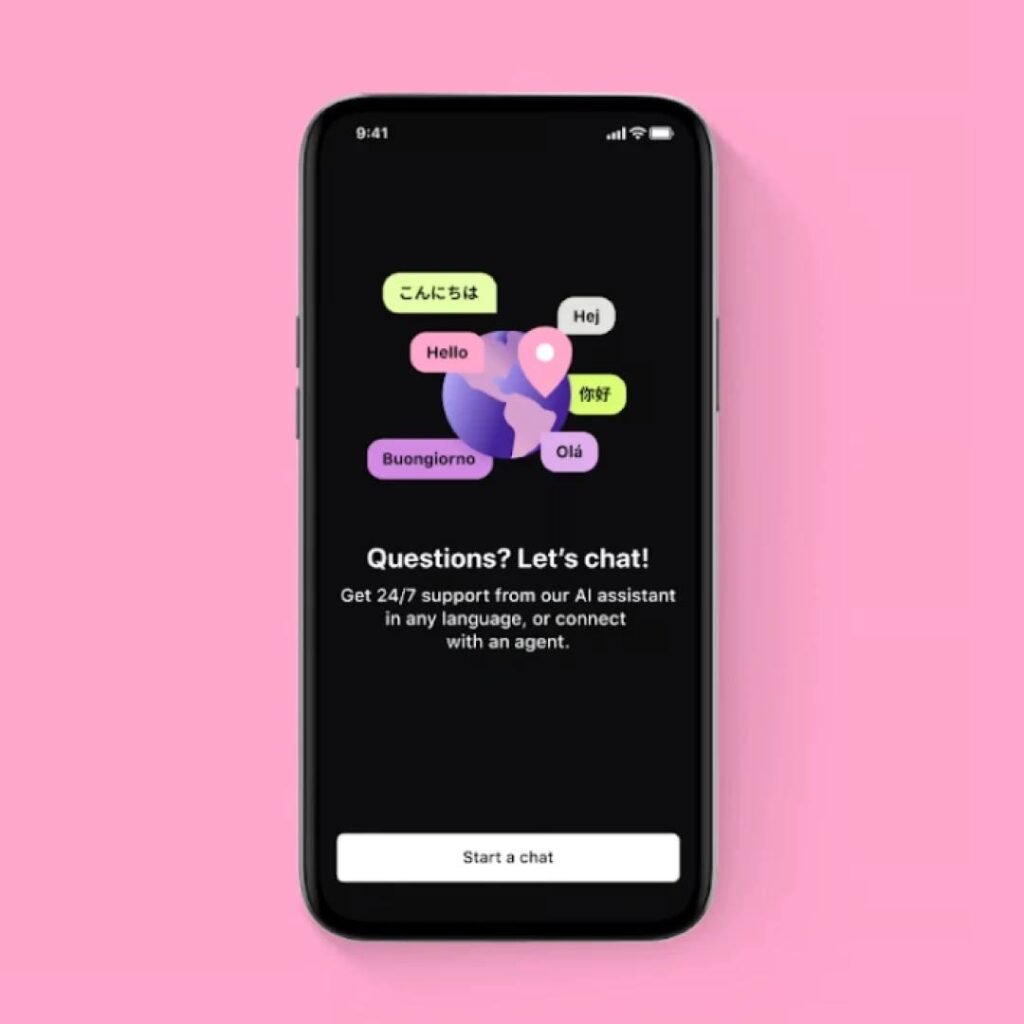
Take the example of Klarna’s OpenAI-powered assistant. After its launch, the bot handled 2.3 million customer conversations in the first month only, which accounted for 2/3rd of all customer service chats that were logged into the system. What’s surprising is that instead of resolving customer issues in 11 minutes, it completed the task within 2 minutes. At the same time, repeat inquiries fell by 25%, which unlocked yet another milestone, proving how conversational AI for customer support can generate valuable business outcomes.
Source: https://openai.com/index/klarna/
The results are more significant here because the bot wasn’t just answering routine questions. Instead, it handled tasks like refunds, returns, and payment-related queries across multiple markets and languages. So, if you want a chatbot with conversational AI capability, check out these 5 best-ranked options in 2026.
Cost & Implementation Considerations
If you want to build a traditional chatbot for your business, the approximate investment necessary will sit between $5K and $30K. But when it comes to an enterprise-grade conversational AI for eCommerce, sales, or customer support operations, the picture is completely different. Here, your budget will automatically enter the bracket of $30K-$150K+.
The price gap stems from what each system is expected to handle in the real world. A bot can work from predefined flows and scripted FAQs. That’s why the engineering effort involved isn’t too much. But when we talk about conversational AI, your investments will cover the costs of LLM training, knowledge retrieval pipelines, memory, API integrations, compliance guardrails, monitoring, and ongoing model costs.
Now, here’s a catch. This explanation doesn’t make conversational AI a better choice automatically. If your customers usually ask repetitive questions, a chatbot can easily deliver the required automation without forcing you to invest in unnecessary complexity. The calculation changes when the assistant needs to understand nuanced requests, maintain context, access customer data, or perform actions.
When to Use a Traditional Chatbot?
Source: ChatGPT
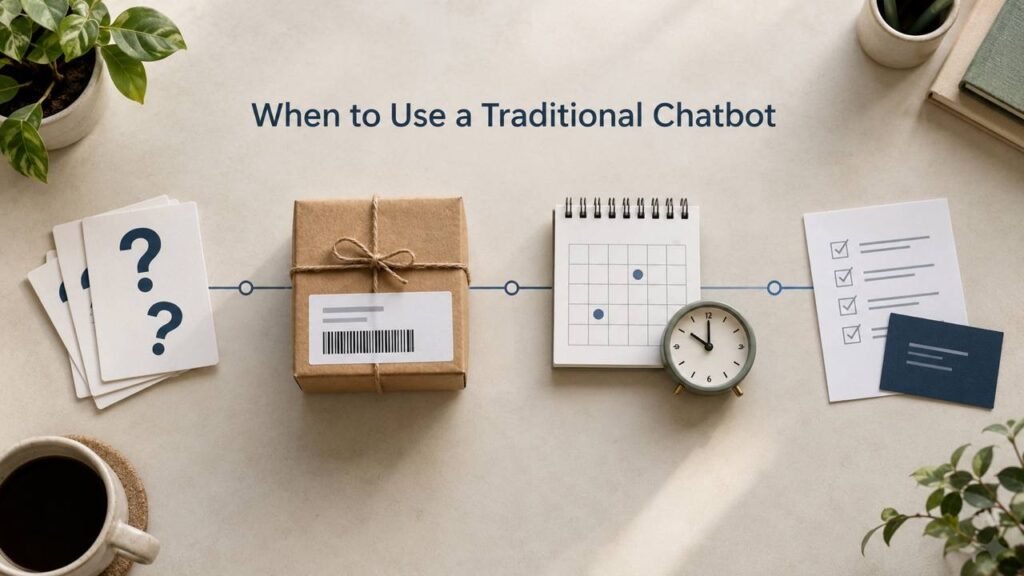
- When customers ask repetitive questions with almost the same underlying context and search intent, a traditional chatbot becomes a good fit.
- It works excellently for order tracking, especially in business use cases where customers provide the order number.
- Businesses can also use it for appointment scheduling, where users simply have to select from available services, dates, and time slots.
- It is effective for lead qualification, but only when prospects can be moved through a fixed series of questions before being routed to a sales rep.
When to Use Conversational AI?
Source: ChatGPT
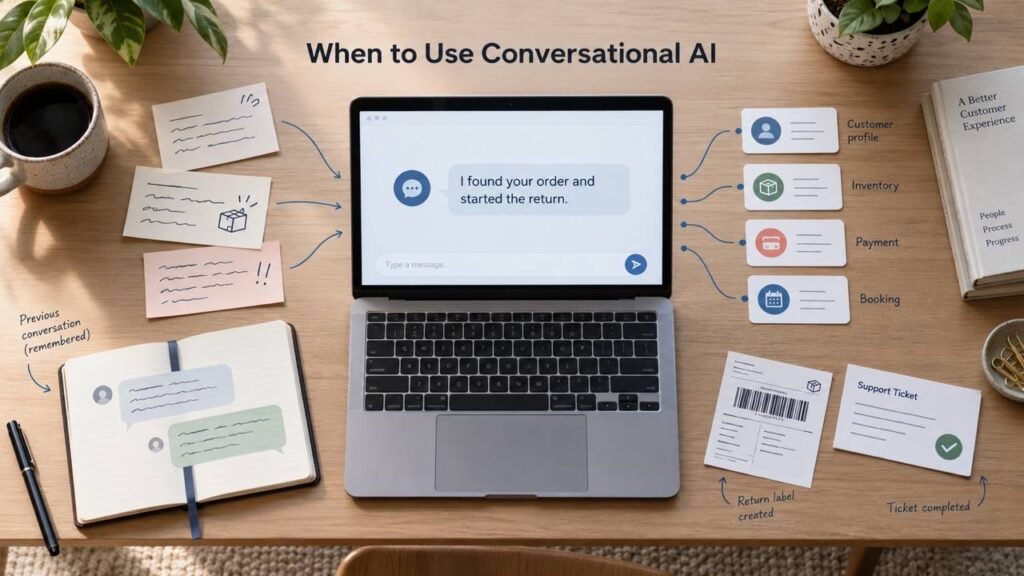
- It’s a strong choice when customers describe their problems differently with every new interaction session.
- If a support conversation requires the model to remember earlier messages and use that information to craft relatable responses in the future, conversational AI becomes the perfect fit.
- It is also valuable in situations where the smart assistant needs to pull records from CRM, ERP, payment, booking, and other enterprise systems your business deals with daily.
- If you want the bot to go beyond answering questions and take actions autonomously, be it initiating a return or creating a support ticket, conversational AI will deliver the expected value.
Conclusion
A scripted bot can be the smarter investment for a narrow workflow. Conversely, when we consider conversational intelligence, its real capability lies in justifying the context, judgment, or core system access required to deliver the expected response in every interaction. That is the real takeaway from the chatbot vs. conversational AI debate, which is why you should look beyond how the assistant talks and evaluate how effectively it helps users reach a credible, relevant conclusion.
Click here for more.