Managing marketing activities across multiple platforms can quickly become complicated. Businesses often rely on separate tools for SEO, email campaigns, customer relationship management (CRM), advertising, website optimization, and marketing automation. Although each solution may perform its individual function well, switching between platforms can consume valuable time, increase operational costs, and make it harder to maintain a consistent marketing strategy.
This is where all-in-one marketing tools become particularly useful. By bringing several essential functions together, these platforms help businesses manage their marketing activities, understand customer behavior, automate repetitive tasks, and improve overall performance from a centralized dashboard.
In 2026, all-in-one marketing platforms are becoming increasingly sophisticated. Many now incorporate artificial intelligence (AI), advanced automation, customer analytics, and optimization tools for both traditional search engines and generative AI platforms.
Whether you run a small business, manage an agency, or oversee marketing for a growing company, choosing the right platform can make a significant difference. Below, we explore five of the best all-in-one marketing tools in 2026, highlighting their main features, advantages, and ideal use cases.
1. Cockpit
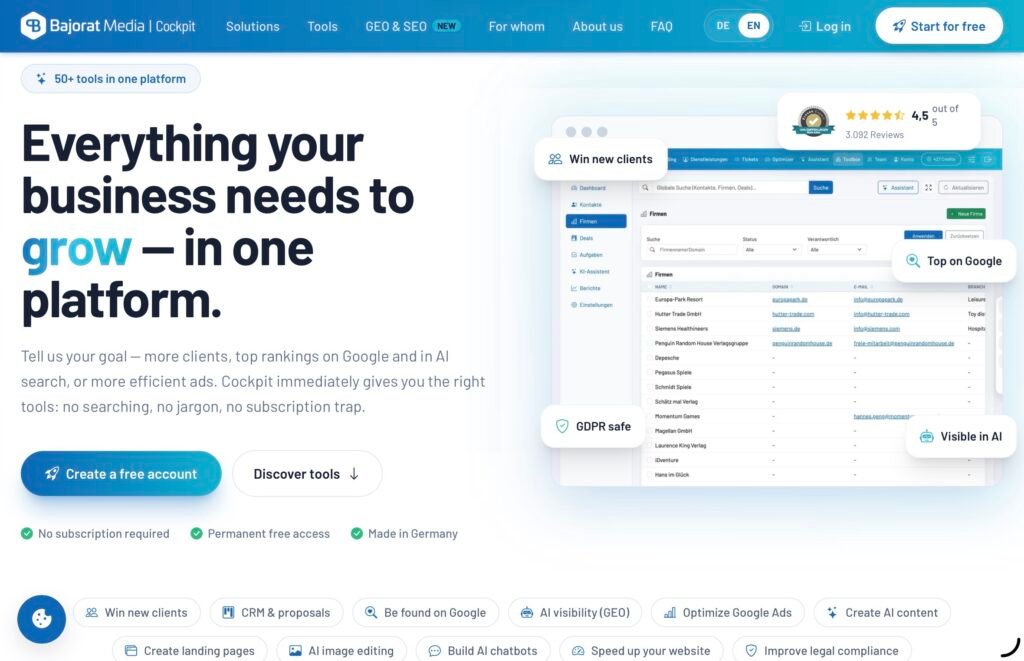
Cockpit is an all-in-one SEO, GEO, and digital marketing platform designed to help businesses improve their online visibility, optimize marketing performance, and manage essential digital activities from one place. With a wide range of practical tools, it enables small and medium-sized businesses, as well as individual enterprises, to strengthen their digital presence without relying on expensive agencies or external specialists.
Beyond SEO and GEO optimization, Cockpit offers tools for analyzing Google Ads campaigns, managing customer relationships through a free built-in CRM, and improving website functionality. WordPress users can also benefit from features such as the Chatbot Manager, which allows them to create custom customer support chatbots for their websites, and a free Consent Management Platform (CMP) that helps websites meet GDPR requirements.
By bringing essential SEO, marketing, and website management solutions together, Cockpit provides businesses with an accessible way to improve performance, save resources, and manage their digital operations more efficiently.
Key Features
- SEO Tools: Analyze and improve website performance, identify optimization opportunities, and strengthen search engine visibility.
- GEO Tools: Optimize content and online presence for generative AI search platforms, helping businesses improve their visibility in AI-generated answers.
- Google Ads Analyzer: Analyze Google Ads campaigns and identify opportunities to improve advertising performance without hiring an expensive agency or freelancer.
- Free CRM: Manage customer relationships, organize contacts, and streamline business interactions with a free CRM solution for SMBs and individual enterprises.
- Chatbot Manager: Create and customize free AI-powered support chatbots for WordPress websites to assist visitors and improve customer communication.
- Free CMP: Manage website cookie consent and support GDPR compliance with a free Consent Management Platform.
- All-in-One Dashboard: Access multiple SEO, GEO, marketing, and website management tools from one centralized platform.
2. GoHighLevel
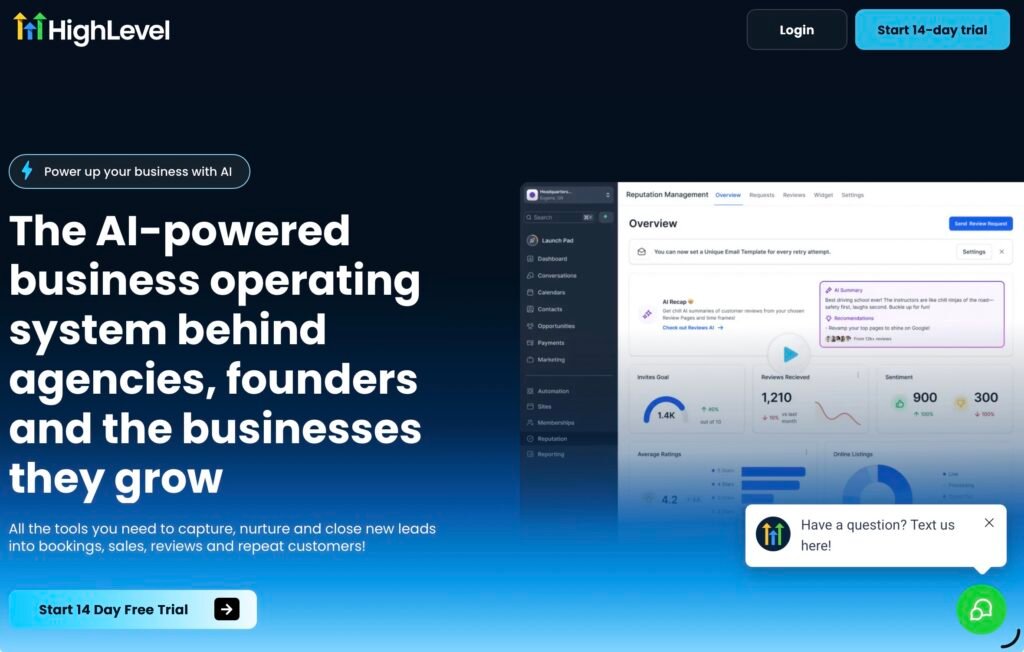
GoHighLevel is an all-in-one marketing and business management platform designed primarily for marketing agencies, consultants, and businesses that want to automate their sales and marketing processes.
The platform combines CRM functionality, marketing automation, website and funnel building, communication management, and reporting. Its main purpose is to help businesses manage the entire customer journey, from attracting potential customers to converting leads and maintaining long-term relationships.
One of GoHighLevel’s strongest features is its CRM and pipeline management system. Businesses can organize contacts, monitor sales opportunities, track conversations, and manage leads throughout different stages of the sales process. This makes it easier for marketing and sales teams to maintain visibility over customer interactions.
GoHighLevel also offers tools for creating websites, landing pages, and sales funnels. Users can design conversion-focused experiences, collect customer information through forms and surveys, and connect these activities to automated workflows.
Another important component is its communication functionality. The platform supports email and SMS marketing, inbound and outbound calling, and unified conversations. This allows businesses to manage multiple communication channels without constantly switching between applications.
For marketing agencies, GoHighLevel offers additional capabilities such as social media management, reputation management, advertising tools, and customizable dashboards. Its agency-focused features also make it possible to manage multiple client accounts from one system.
Key Features
- CRM and Pipeline Management: Organize contacts, track leads, and monitor sales opportunities.
- Marketing Automation: Create workflows that automate follow-ups, customer communication, and other repetitive activities.
- Website and Funnel Builder: Build websites, landing pages, and sales funnels.
- Email and SMS Marketing: Communicate with prospects and customers through automated and scheduled campaigns.
- Social Media Management: Manage social media activities from the platform.
- AI Tools: Access AI-powered features for conversations, content, funnels, and reputation management.
- Reporting and Analytics: Monitor marketing performance through customizable dashboards.
Why Choose GoHighLevel?
GoHighLevel is particularly valuable for marketing agencies managing several clients or businesses with complex lead-generation processes. Its extensive automation capabilities help reduce manual work, while its CRM and communication features keep customer interactions organized.
However, its broad feature set may require some time to learn, particularly for businesses that only need basic marketing functionality. Users should also consider usage-based charges and optional add-ons when evaluating the overall cost.
3. Keap
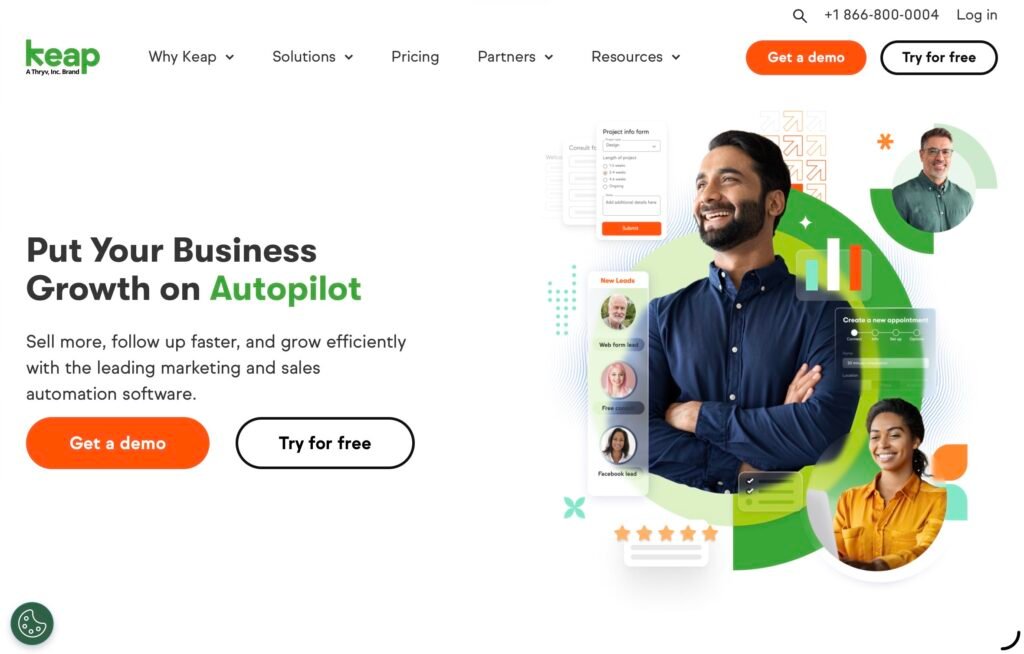
Keap is a CRM and marketing automation platform designed to help small businesses organize customer information, automate follow-ups, and manage sales activities more efficiently.
Rather than focusing exclusively on marketing campaigns, Keap connects marketing, sales, and everyday business operations. This makes it particularly useful for service-based businesses, consultants, entrepreneurs, and companies that depend on consistent communication with potential and existing customers.
The platform’s CRM functionality provides a centralized place to store customer information, organize contacts, track interactions, and manage sales opportunities. Businesses can use tags, contact segmentation, and customizable records to better understand their audiences and personalize communication.
Keap also provides a visual automation builder that allows users to create workflows based on specific customer actions. For example, when someone submits a contact form, the platform can automatically send a welcome email, assign a follow-up task, and move the lead through the sales pipeline.
Email and text messaging are other important parts of the platform. Businesses can create automated campaigns, send promotional messages, and follow up with prospects based on their engagement.
In addition, Keap includes landing pages, appointment scheduling, payment management, invoicing, and reporting. These features allow businesses to manage more of their customer-facing activities without relying on several disconnected applications.
Key Features
- CRM: Manage customer information, organize contacts, and track interactions.
- Marketing Automation: Build automated workflows for lead nurturing and customer follow-ups.
- Email and Text Marketing: Send promotional campaigns and personalized communications.
- Sales Pipeline: Track deals and monitor prospects throughout the sales process.
- Landing Pages and Forms: Capture leads and collect customer information.
- Appointments: Schedule meetings and automate appointment reminders.
- Payments and Invoicing: Manage payments, quotes, and invoices.
- Reporting: Monitor sales, marketing, and business performance.
Why Choose Keap?
Keap is a strong option for small businesses that want to connect their marketing and sales activities. Its biggest advantage is the ability to automate customer follow-ups and administrative tasks alongside traditional marketing campaigns.
For example, a consulting business can use Keap to capture leads, schedule appointments, send reminders, follow up after consultations, and manage payments through one connected system.
However, businesses primarily interested in advanced SEO, GEO, or website optimization may need additional specialized tools. Keap is more focused on CRM, automation, and business management than on comprehensive digital marketing analytics.
4. Ontraport
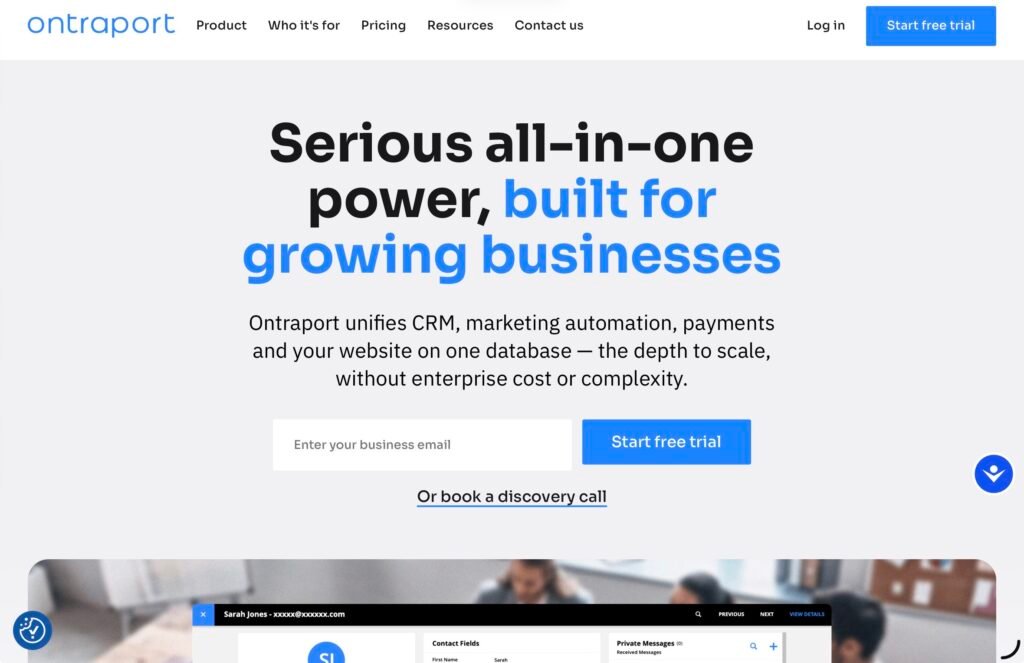
Ontraport is an all-in-one CRM and marketing automation platform designed for small and medium-sized businesses that need more control over their customer journeys, marketing campaigns, and business processes.
The platform combines CRM, email and SMS marketing, automation, website building, payment processing, and customer management. Its main strength is the ability to connect different business activities through customizable workflows and centralized customer data.
Ontraport’s CRM provides a customizable database where businesses can store customer information, organize contacts, and track interactions. Its Smart Pipelines help teams visualize sales processes and monitor opportunities as they move through different stages.
Marketing automation is another central part of the platform. Users can build multi-step workflows that respond to customer actions, engagement, and specific conditions. These workflows can automate email communication, sales follow-ups, lead management, and other business activities.
Ontraport also offers website and landing page creation tools, membership management, payment processing, and subscription management. These features make it particularly relevant for businesses selling online courses, memberships, digital products, or subscription-based services.
Another advantage is its marketing tracking and reporting functionality. Depending on the subscription plan, businesses can access campaign tracking, conversion reporting, testing tools, and more advanced personalization features.
The platform also incorporates AI functionality to support users with different marketing and business tasks.
Key Features
- CRM and Contact Management: Maintain customer records, organize information, and track customer interactions.
- Marketing Automation: Create advanced workflows using triggers, conditions, and automated actions.
- Email and SMS Marketing: Manage promotional campaigns and automated customer communication.
- Smart Pipelines: Visualize sales processes and monitor opportunities.
- Website and Landing Page Builder: Create web pages and customer-facing experiences.
- Membership Management: Build customer portals and manage access to exclusive content.
- Payment Management: Process payments, subscriptions, and recurring transactions.
- Marketing Analytics: Track campaign performance, lead sources, and conversions.
Why Choose Ontraport?
Ontraport is particularly suitable for businesses with more complex marketing operations. Its customizable CRM, automation workflows, and payment functionality make it possible to manage several stages of the customer lifecycle within one platform.
It is also a good choice for businesses that sell memberships, online courses, or subscription-based products, as it combines marketing automation with website and payment management.
However, its extensive functionality may be more than smaller businesses need. Companies should evaluate their contact volume, required integrations, and subscription costs before choosing a plan.
Ontraport offers a 14-day free trial, allowing potential users to explore its capabilities before committing to a subscription. Try Us on for Free +1
5. ActiveCampaign
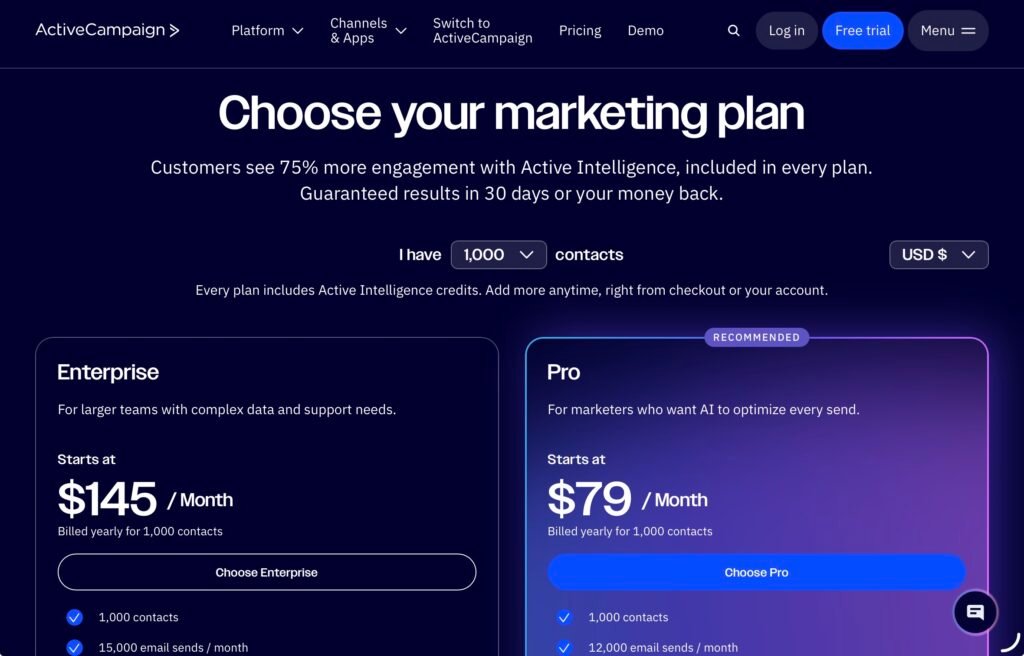
ActiveCampaign is a marketing automation and customer experience platform known for its email marketing capabilities, advanced segmentation, and personalized customer journeys.
The platform helps businesses create targeted marketing campaigns, automate communication, and connect customer engagement data with sales activities. It is especially useful for companies that rely on email marketing to generate leads, nurture prospects, and maintain relationships with existing customers.
ActiveCampaign’s email marketing tools allow users to create newsletters, promotional emails, and automated campaigns using a drag-and-drop editor and pre-built templates. Businesses can segment audiences based on customer characteristics, previous interactions, and engagement behavior.
Its automation builder is another major advantage. Users can create multi-step workflows with different triggers, conditions, and actions. For instance, a customer who visits a specific website page or clicks a particular email link can automatically receive relevant follow-up communication.
ActiveCampaign also provides CRM functionality and sales automation features. Depending on the selected plan and add-ons, businesses can manage sales pipelines, organize contacts, track deals, and use lead scoring to identify promising prospects.
In 2026, ActiveCampaign continues to expand its AI capabilities through Active Intelligence. These features help users create campaigns, build automation workflows, analyze performance, and identify opportunities for improvement. The platform also supports cross-channel communication through email, SMS, WhatsApp, and website messaging, depending on the available plan and integrations.
Key Features
- Email Marketing: Create newsletters, promotional campaigns, and automated emails.
- Marketing Automation: Build multi-step workflows based on customer behavior and engagement.
- Advanced Segmentation: Organize audiences and deliver more relevant marketing messages.
- CRM and Sales Automation: Manage contacts, sales pipelines, and customer opportunities.
- AI-Powered Marketing: Use Active Intelligence to support campaign creation, automation, and performance analysis.
- Cross-Channel Communication: Coordinate marketing activities across email, SMS, WhatsApp, and website messaging.
- Analytics and Reporting: Monitor campaign performance, customer engagement, and conversions.
- Integrations: Connect ActiveCampaign with external applications and business tools.
Why Choose ActiveCampaign?
ActiveCampaign is a particularly good choice for businesses that prioritize personalized communication and sophisticated email marketing. Its automation capabilities allow companies to create customer journeys that respond to individual behavior rather than relying on generic, one-size-fits-all campaigns.
For example, an online store can use customer purchase history and browsing behavior to send relevant product recommendations, abandoned-cart reminders, and post-purchase emails.
However, businesses should carefully review the available subscription plans, as certain advanced CRM, reporting, and communication capabilities may require higher-tier plans or additional purchases. ActiveCampaign +2
How to Choose the Best All-in-One Marketing Tool
Although all five platforms offer multiple marketing and business management capabilities, they serve slightly different purposes. The best choice depends on your company’s priorities, available resources, and marketing strategy.
Before investing in a platform, consider the following factors:
1. Your Primary Marketing Goals
Start by identifying the activities you want to improve. If your main priority is SEO, GEO, and digital visibility, Cockpit offers a combination of relevant optimization tools. If you need advanced email automation, ActiveCampaign may be a better fit. Agencies managing multiple clients may find GoHighLevel more suitable.
2. Automation Capabilities
Look beyond basic automated emails. Consider whether the platform allows you to build workflows based on customer behavior, website interactions, purchases, and other triggers. More advanced automation can reduce manual work and improve the customer experience.
3. Integration and Compatibility
Make sure the platform works with your existing website, ecommerce system, payment providers, and other business applications. WordPress compatibility, for example, may be particularly important for businesses managing their websites through this CMS.
4. Pricing and Scalability
Compare subscription plans, contact limits, additional users, usage-based charges, and paid add-ons. A platform that seems affordable initially may become more expensive as your business grows. Consider both your current needs and future requirements.
5. Ease of Use
An extensive feature list is not necessarily an advantage if your team cannot use the tools effectively. Look for platforms with intuitive dashboards, useful documentation, and sufficient customer support.
Final Thoughts
All-in-one marketing tools can simplify business operations by bringing essential activities together and reducing the need for multiple disconnected subscriptions. However, the right platform depends on what your business needs most.
Cockpit stands out as a practical option for businesses looking to combine SEO, GEO, Google Ads analysis, CRM, and WordPress website management. GoHighLevel is particularly useful for marketing agencies and businesses that need extensive automation and lead management capabilities. Keap offers a convenient solution for small businesses looking to connect customer management, sales, and marketing activities, while Ontraport is suitable for companies with more complex workflows and subscription-based business models. Finally, ActiveCampaign is a strong choice for businesses that prioritize email marketing, segmentation, and personalized customer journeys.
Ultimately, the best all-in-one marketing platform is not necessarily the one with the most features. It is the one that supports your business goals, fits your budget, and helps your team work more efficiently. Before making a decision, evaluate your priorities and take advantage of free trials or product demonstrations whenever available.
Click here for more.