It is time to find out how to get more plugin reviews? There are very few things in the world where both the positive and negative aspects are useful. One such thing is a product review. A positive product review gives us inspiration, and a negative product review gives us the motivation to make our product even better.
A WordPress plugin business owner knows how important is to correctly promote WordPress plugin and how important is every single product review is. Their developer works all day to create a top-notch plugin. A marketer works so hard to highlight the best features. The support team is vigilant 24/7 so that the user doesn’t face any kind of obstacles.
But they don’t always get Five-star Reviews as expected. Sometimes this is due to some mistakes, and sometimes due to the lack of certain strategies. In this blog post, I will discuss exactly this: How to get more plugin reviews for your WordPress plugin on WordPress.org.
After finishing this blog, you will clearly understand why your WordPress plugin needs many more Five-star Reviews and how to get more plugin reviews. You will learn some strategies that you can use to rapidly bring in a lot of reviews.
Let’s dive in.
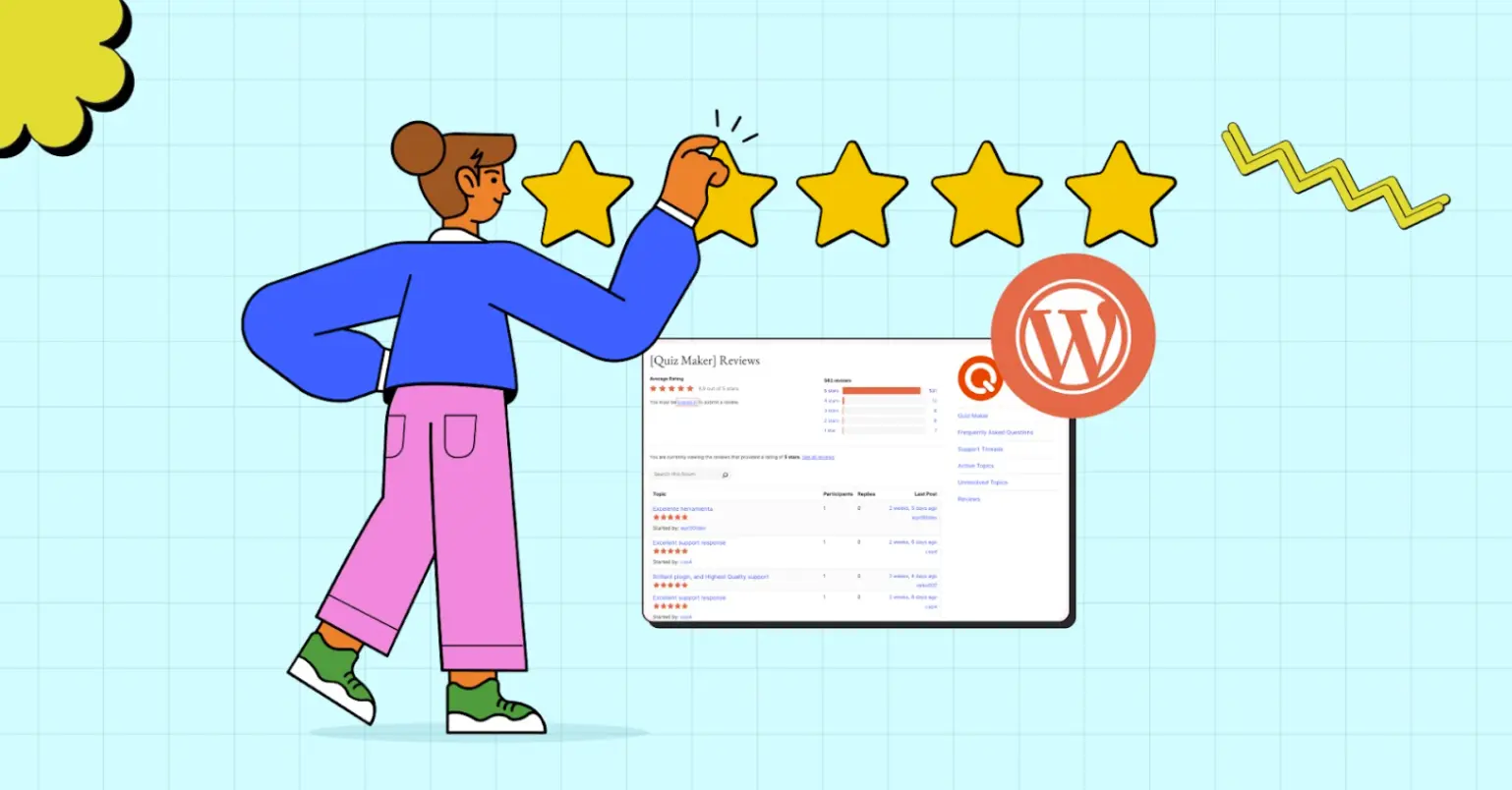
Why A Plugin Needs Five-Star Reviews
Around this time last year, our company noticed that all our plugins were significantly falling behind on the WordPress plugin search page for our target keywords. What was ranking at number two or three just two months ago had slipped to number eight or ten.
Naturally, the speed at which our Active Installations were growing had significantly decreased.
We did everything necessary then, updated the README file, updated it repeatedly, added many keywords, and removed some. We even changed all the screenshots in that file, but there wasn’t much change in the ranking.
When almost all options were exhausted, and this quarter of last year was also ending, we thought about working on reviews. So, besides the WordPress plugin SEO optimizations, plugin reviiews are important as well. We asked our support team to proactively seek reviews, by sendig emails and asking for reviews, we asked in our community, and even personally asked loyal customers to give reviews. We were confident about our plugin, so most reviews were 5 stars.
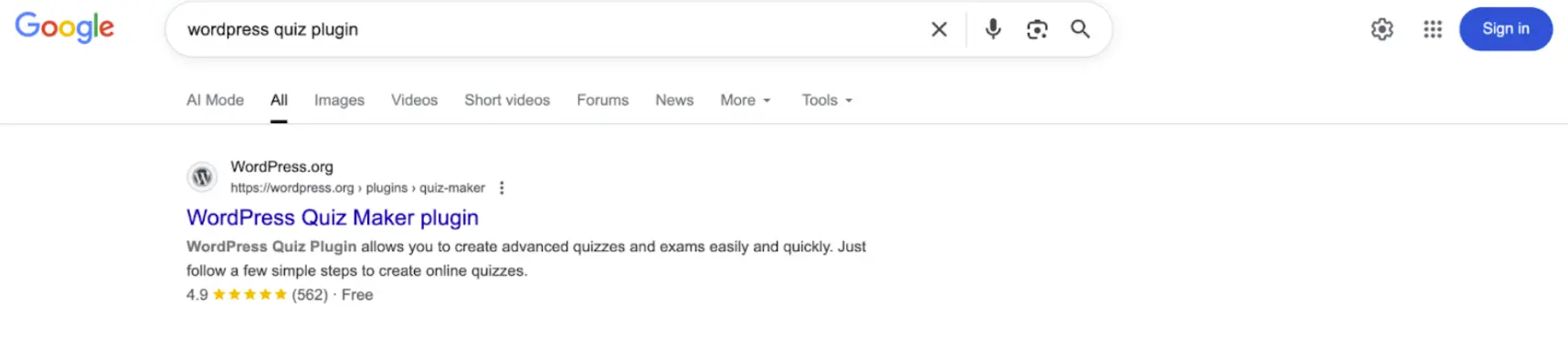
Hence, there where immediate results. Within a month, our ranking on WordPress significantly improved. Another good thing about being in the repository is that our plugin started ranking on Google with rich snippets for niche keywords as well.
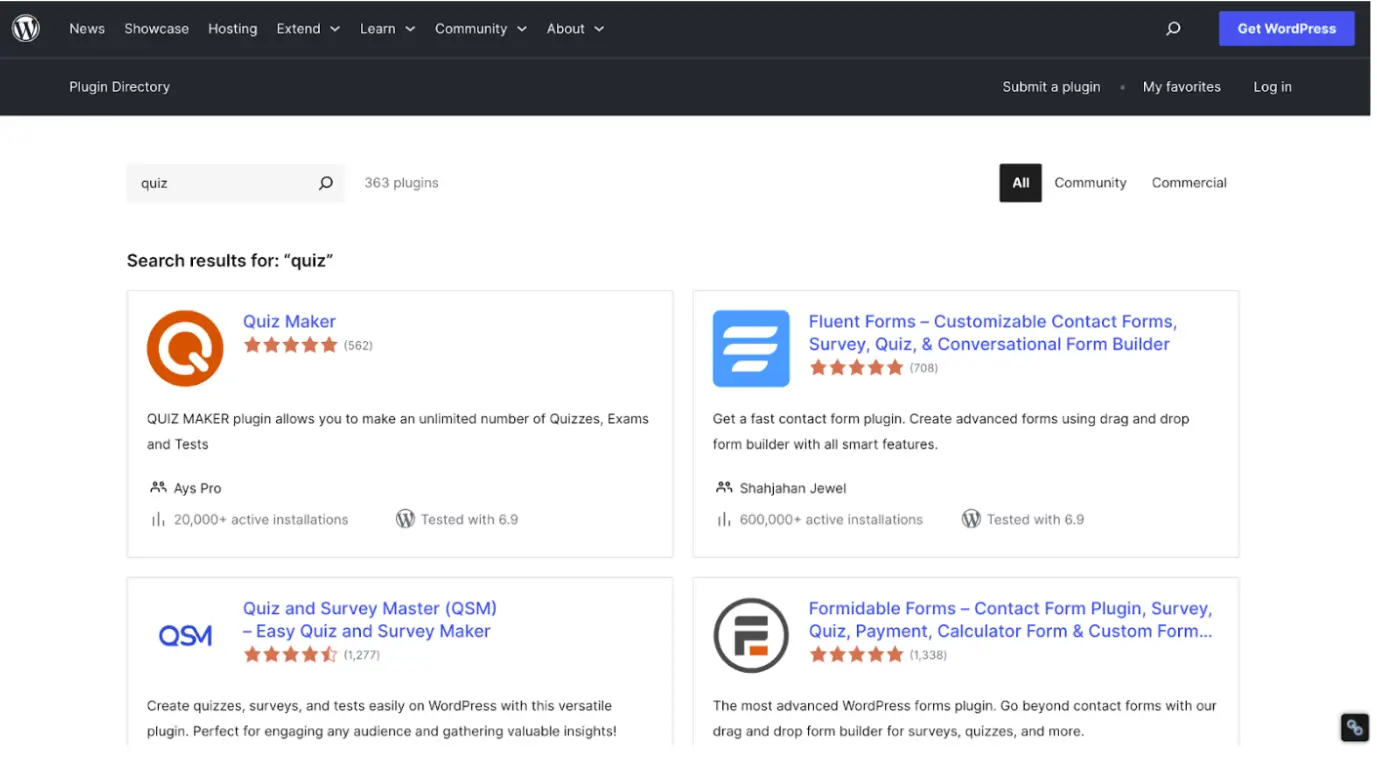
Five-star reviews on WordPress can bring about more change than this. Currently, we can get all these things:
- It can bring a good position in the repository.
- It can lead to a good position in Google search.
- It can attract new customers.
- They counterbalance the bad reviews.
- It helps maintain brand reputation.
So on… maybe a lot more.
Now I will move to the next phase, where I will describe the strategies I actually used.
How To Get More Plugin Reviews
When we were working to increase our reviews, we made some basic updates to the plugin. Then, we engaged in some proactive review-seeking activities. We used many different media for this work. I will discuss all the topics one by one. For now, I’m starting with the basic points.
First, the Fundamentals
Let’s start with the fundamentals. You truly don’t deserve 5-star reviews if the fundamentals of your plugin aren’t right. Therefore, you can apply other strategies only after these basic issues are resolved.
1. Offer a Great Free Plugin
If you can do this, you might be able to generate many 5-star reviews without doing much else. Having a really good free plugin in the repository means WordPress will admire you, and users will certainly benefit from using your plugin. So, this is a very good approach.
But yes, a great free plugin means ‘Great.’ No one wants to constantly see ‘upgrade to Pro’ notices when they come to see a free plugin. Nor do they want to get stuck every time they try to do something. The free plugin should at least give the user the option to create their MVP (Minimum Viable Product). No one is stingy about paying for advanced work.
2. Always Provide the Right Value Before Asking
Before asking for a review, you must check whether you are providing the right value and whether the user is finding what they are looking for. Are they encountering any obstacles while using your plugin?
Only when you have filled out this checklist can you ask for a review. You might even receive a review before you ask.
Therefore, you must pay attention to some of the most important points.
- Smooth Onboarding: The first-run experience has to be good. The first 5 minutes of the journey should provide value.
- Clear Documentation: Even after very good onboarding, the user may have questions. You must be ready for this. There must be clear documentation so the user can easily find answers to all their questions.
- Careful about Every Friction Point: Even a single friction point can lead to a negative review. Even worse, a broken website. You must ensure the plugin doesn’t conflict with other plugins, no error messages, and that the UI isn’t confusing. If it is, fix it now.
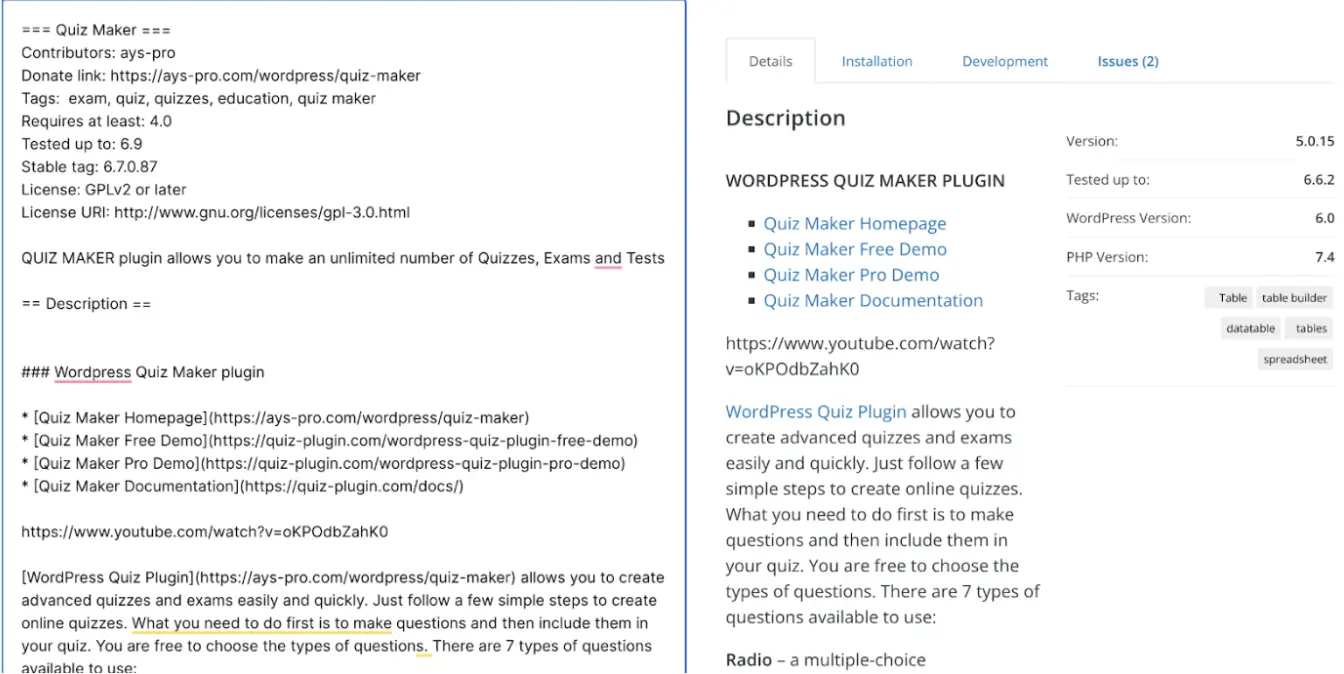
3. Provide an On-Point, Concise README File
This file is a very important matter. Plugin marketing on WordPress starts here. A user might not find the features they want in a README written in a developer’s dry language. And even if they do, they might not be attracted by the presentation. Therefore, this file must be written professionally.
Free features must be separately mentioned as ‘Free’ and Pro features as ‘Pro’ so a user doesn’t come thinking a feature is free only to find it’s a Pro feature. That’s a guaranteed 1-star. And since this file has to be written in Markdown, you must write it very carefully.
4. Resolve Every Support Ticket as Quickly as Possible
The WordPress support portal cannot be avoided in any way. Instead, you should focus on how to reduce the response time to 5/2/1 minutes. Truthfully, every reply to a support ticket on the WordPress support forum acts like a plugin update.
When WordPress sees that your plugin has regular updates, WordPress automatically keeps you ahead in the repository. And being prominent significantly increases the chance of getting reviews.
5. Respond the Reviews, Especially Negative Ones
You should respond to every single review. Especially the negative ones. Whenever a new review is published, you need to analyze it and give the proper reply. If it is a negative one, you should apologize and offer a solution if possible.
You must follow up for negative reviews. We have even seen instances where a 1-star review turned into a 5-star review six months later, following a follow-up message after a required feature was added.
6. Provide Outstanding Dedicated Support for WordPress Plugin Reviews
Dedicated support can be called the powerhouse for 5-star reviews. There is not much to say about this. If your support heroes work correctly, 5-star reviews can be increased very quickly. Implementing live support can be a very effective path in this case.
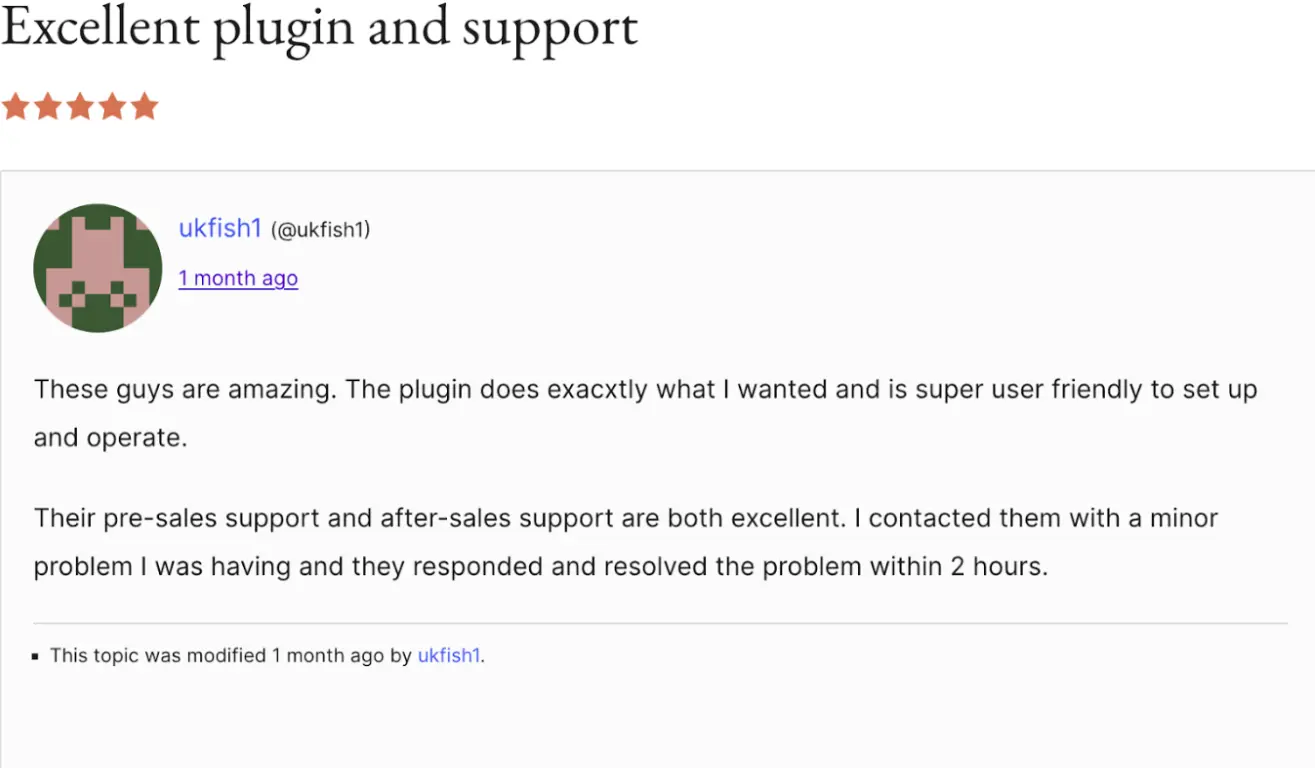
7. Feature Reviews and Reviewers on Your Website
Almost everyone likes to be featured. In this case, featuring reviews on your website, social media, and community can inspire more reviewers to leave a review. Large brands can be seen following this strategy.
Good brands often keep a dedicated “Wall of Love” page on their websites. It can be a great way to incentivise them in an ethical way and give them attention. Barely 1% of WordPress users review a plugin. Let them get a space on the websites.
Ask for Reviews (Proactively)
Once you have done all of the above, you are now in a position to ask for reviews. You have a good plugin, you have provided all the resources, but still, your reviews might not be coming in.
Perhaps many people wanted to give a review for your plugin, but forgot or didn’t have the time. In their case, you can certainly send a message asking for a review.
You must remember that you can ask for a review, but you cannot ask for a 5-star review. Now, let’s see where, how, and when asking for a review significantly increases the chances of getting one.
8. How to Get More Plugin Reviews Via Dedicated Support Portal
As I said before, this is a review powerhouse. As soon as a support ticket is completed very well, you can immediately ask for a review for both the plugin and the support. And since the user will be happy with the good service at that time, a big opportunity is created to get a 5-star review.
9. How to Get More Plugin Reviews Via Email
Email is a very good medium for follow-up. A user might give a 1-star review for asking for a feature and not getting it. But when you have implemented that feature, you can definitely inform them via email and ask for a review along with it.
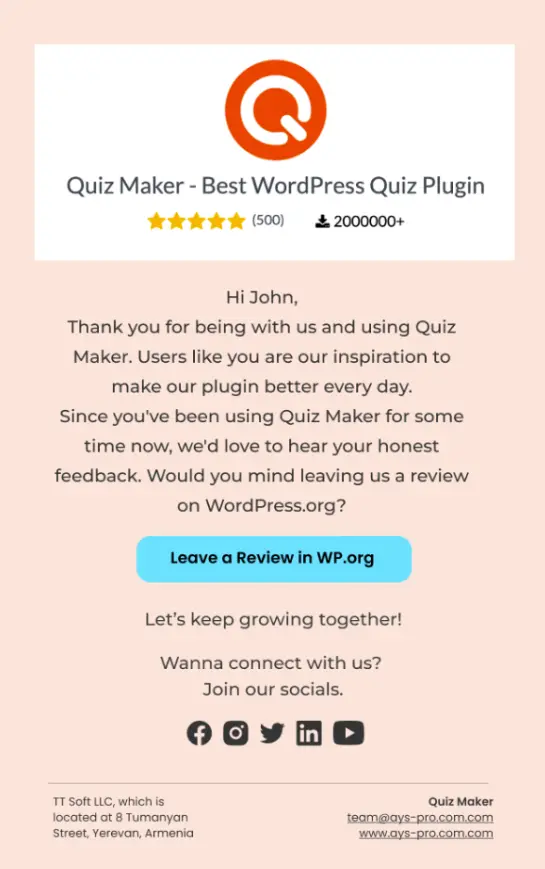
Additionally, you can email loyal customers just to ask for reviews. Asking for a review by adding a ‘Review Our Plugin’ button in a nicely designed email can get you 5-star reviews. You can try this strategy once every quarter.
10. How to Get More Plugin Reviews by Asking Plugin Community
Community marketing is now a very good marketing medium for the plugin business. Big brands have their own communities. Many also build their own gated communities on Facebook, WhatsApp, Slack, or LinkedIn. Asking for reviews in those communities makes getting 5-star reviews quite certain.
The best method is to create a forum on the plugin website. In the forum, users can discuss the plugin among themselves. Sometimes they even solve problems among themselves. Such forums are the best medium for word-of-mouth marketing.
11. Add a Subtle Review Notice in the Dashboard
This is a method that I personally don’t like, but it is very effective. I don’t personally prefer such review notices. However, this method can be used just for the purpose of reminding users.
In that case, the notice must be subtle. And the option or button to skip it must be in a visible location. This is not an unethical practice on WordPress.
However, I would say this strategy should never be run for a long period of time. This notice should be kept for a maximum of 10-15 days during a single quarter.
The Timing is Important when You Ask for Reviews
Whether you ask for a review via email, on the support portal, or in the community, timing is a big factor. I don’t think anyone likes a surprise when they are asked for a review.
If you run an email campaign, no one will appreciate an email asking for a review at 2 AM. Similarly, asking for a review in the middle of providing support or before the issue is not solved only increases the chance of getting a new 1-star review.
So, when scheduling email campaigns, consider when people are in the best mood. That is definitely not during the first hour of the office on Monday.
After providing a solution in support, you can ask if they need anything else. If they happily say, ‘No thanks,’ then you can suggest, ‘If you have time, please leave us a review; it greatly increases our motivation.’
Posting every day in the community asking for reviews will only get you abuse and nothing else. However, on a day when everyone is excited and discussing a particular feature, a post asking for a review might be appropriate.
Final Word
Ultimately, this is entirely a psychological matter. Giving a review depends on the user’s mental state. Your job is to extract that 5-star review when the user is very delighted.
Let me say again, asking for reviews for a plugin is not a bad thing. You just must follow the WordPress code of conduct.
For example, sockpuppeting or fake accounts for reviewing. Or tempering or fake reviews. Or you can never incentivize the reviewer, which calls the review into question. Asking for and taking reviews within ethical bounds is definitely a very good practice.
Let’s return to where I started. A review is one of those things that is good when it’s positive, and even negative. So, take both motivation and inspiration from the reviews and focus on further improving the quality of the plugin.
And occasionally remind the user if they forgot to leave a review. Remind them how essential reviews are for our plugin development. And remind them that their opinion can change many things.