If you are a plugin developer or an agency who sells WordPress plugins, you definitely need to increase plugin downloads with content. How?
Read and find out how to attract plugin users with right blog content, increase your plugin installs, rank higher and most importantly convert your blog readers into active customers.
It is a fact that your product won’t have growth without visibility, information, and trust. Remember, even an incomparable plugin struggles if users have no idea of what it does, what are the main functionalities, how it solves their problems, and most importantly why it is better than the alternatives.
And that is exactly where the blog content becomes one of your most influential growth tools.
Why Blog Content Matters for Plugin Growth
Blog content is a true organic traffic magnet through all of the search engine platforms. Furthermore, via a properly generated blog content you can set up brand authority, and lead potential users through the entire purchasing journey.
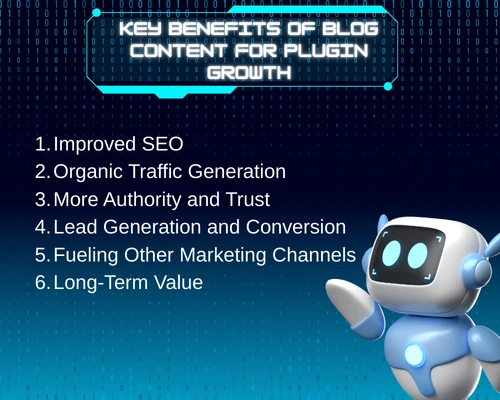
Key Benefits of Blog Content for Plugin Growth
Improved Search Engine Optimization (SEO) – Each blog post is amazing for your SEO, it provides a new, enrolled page for the search engines. Thus, it grows the chances of appearing in search results for different keywords and long-tail phrases. Moreover, consistently publishing blog posts will bring a flow of fresh, relevant content signals to search engines. All these, will showcase that your website is active and authoritative. Hence, leading to higher rankings and greater visibility.
Organic Traffic Generation – Remember, blogs attract those visitors who are eagerly searching for solutions to their problems. By providing both helpful and high-quality content that fulfills all of the user queries, you will bring highly targeted organic traffic to your website and there will be no need for expensive ads.
Establishment of Authority and Trust – Regularly publishing insightful blog posts and content where your brand is demonstrated as a leader in your niche builds credibility and trust with your audience. Thus, making them more likely to choose your plugin over a competitor’s.
Lead Generation and Conversion Nurturing – Blog posts are a guide for your potential consumers through their buyer’s journey. Correctly insert strategic calls-to-action (CTAs) within your blog content and convert readers into purchasers or email subscribers.
Fueling Other Marketing Channels – What is amazing blog content is that it can be “renovated” and shared across various platforms. Reuse and share your content via social media, email newsletters, and videos. As a result, maximize your plugin reach and drive traffic from multiple sources back to your website.
Long-Term Value – Paid advertisements are a one-time solution, they stop working once the budget runs out. In contrast to that, a well-written content is an evergreen blog post (content that remains relevant over time). Afterward, it can continue to attract traffic, bring more users and generate leads for months or even years after publication.
In a nutshell, blog content gives a cost-effective and sustainable strategy to reach your target audience, show them the value of your plugin, and build a loyal customer base.
Step 1 Understand Your Plugin’s Target Audience to Increase Plugin Downloads With Content
The first step to make before generating content that converts plugin users is understanding your plugin’s target audience. You have to understand for whom your plugin is mostly beneficial and use that information to tailor in your content strategy for plugins.
Key Steps to Understand Your Plugin’s Target Audience
- Analyze Your Plugin’s Value – What specific problem does it solve? Who experiences this problem the most? What makes your solution better or different from already existing alternatives?
- Conduct Market Research and Competitor Analysis
- Industry Trends – Use various tools to see what topics and keywords are becoming more or less popular within your niche.
- Gather Data on Your Current Users (If Applicable)
- Analytics – explore user demographics (age, location, device type) and behavior (most used features, content engagement, traffic sources)
- Surveys and Feedback – understand your consumers pain points, motivations, and more.
- Create Detailed Buyer Personas – Include demographic details (age, job title, income, location), psychographic information (interests, values, personality traits, lifestyle), define their goals, challenges, and how your plugin helps them, etc.
As a result be prepared to correctly use your collected information and strategies and build proper strategies based on market conditions and user behaviors constant change.
Step 2 Choose Content Types That Attract Plugin Users
In nowadays fast-growing digital world where content plays a huge role there are various types of contents. After understanding who your target audience is, it is time to choose the right content type that will fit and attract them.
Here I have a checklist of content types and their best examples for you that will help you when thinking of how to target plugin users with blog content.
The Best Content Ideas to Attract Plugin Users
WordPress Beginners Guides and Tutorials
How-to posts
Practical examples
Use-case demonstrations
WordPress Plugin Reviews
Deep explanation of plugin features
Showcase some scenarios
Demonstration of plugin value and time savings
WordPress Plugin Comparison and Alternative Posts
“[Your Plugin] vs [Competitor’s Plugin]”
“Best plugins for [use case]”
Honest pros and cons
Case Studies and WordPress Plugin Promotions
Demonstrate real results
Before and after
Installation numbers, conversions
Problem-Solving and WordPress Marketing Tips Content
Pain-point-driven articles
“How to fix ___ with a plugin”
“The easiest way to ___ in WordPress”
Step 3 Build SEO-Optimized Topics to Increase Plugin Downloads With Content
After deciding which content type suits your target audience, it is time to choose an SEO optimized topic that will match to your user intent.
To make your topic SEO optimised, at first you’ll need to find out which keywords plugin users are usually actively searching for.
Most commonly plugin users are making
Feature-related searches
Industry-specific searches
Funnel stage keywords
It is important to generate content mainly based on plugin use cases. Make sure to target all of the solutions the plugin provides, not features. Pay attention to benefits users will care about.
Surely a properly SEO-optimised topic means higher engagement rates.
Step 4 Structure Your Blog Posts to Increase Plugin Downloads With Content
Once you have chosen the content type and topic for your upcoming blog post your next step will be building a strong structure for your blog post.
Structuring a blog post is also one of the key elements. All in all, structure makes your content easier for readers to skim, understand the topic better, and builds trust. Most importantly a good structure enhances readability and as a result you get an improved engagement. Furthermore, it boosts SEO performance by helping search engines like Google understand topic relevance and leads to better rankings.
First, hook readers with an engaging introduction
Why this topic matters
Problem overview
Quick value promise
Use clear and relevant subheadings
Benefit-focused section titles
Always include keyword variations
Add visuals, screenshots and more
Show the plugin in action
Step-by-step clarity
Keep content beginner-friendly
Pay attention to lexicon
Provide explanations
Explain with short, clear steps
Keep content beginner-friendly
Pay attention to lexicon
Provide explanations
Explain with short, clear steps
Step 5 Showcase Your Plugin Naturally Without Being Pushy To Increase Plugin Downloads With Content
Thereafter, you need to make your blog content to promote your plugin naturally, no one loves being told what to do and remember pushy content will quickly annoy your users and you will get no results.
To demonstrate a plugin naturally, focus on its values, usability, and add social proofs rather than aggressive sales tactics.
Please note, the key is to help users understand how the plugin solves their problems through clear content and real examples.
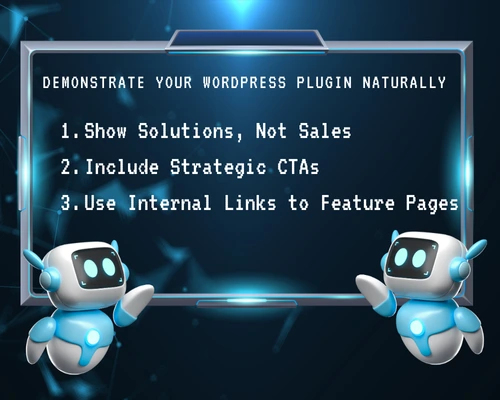
Here are effective strategies for naturally showcasing your plugin
Show Solutions, Not Sales
- Demonstrate the plugin solving a real problem
- Provide examples, not pitches
Include Strategic CTAs
- “Try the plugin”
- “Download free version”
- “See live demo”
Use Internal Links to Feature Pages
- Pricing page
- Documentations
- Product landing pages
Step 6 Optimize Each Blog Post for Conversions
One more important step to take is the optimization of blog posts for conversions.
Add Content Upgrades
- Free checklists
- Downloadable templates
- Easy-to-use beginner guides
Insert Clickable Callouts
- Highlight the best features
- Add installation shortcuts
Use Scheme Markups When Needed
- FAQs
- Relevant how-tos
- Product schemes
Step 7 Distribute Your Blog Content for Maximum Reach
Last but not least, always distribute your content out of the blog. To maximize blog reach, use a multi-channel approach.
Share Blog Content Teasers on WordPress and Plugin Communities
Facebook groups
LinkedIn
X
Repurpose Content for Video, Docs & Email
Turn blog into WordPress plugin tutorial videos
Break sections into social posts
Add snippets to newsletters
To Sum It Up..
As a summary to all formerly mentioned information, I want to add a final tip for your blog strategy to get more plugin installations.
- Always focus on pain points plugin users face
- At first write for the beginners
- Use more visuals to demonstrate how your plugin works
- Be helpful, not promotional
- Build a content for all funnel stages
- Publish consistently and update regularly
Hence, by generating a compatible, useful, SEO-driven blog content that solves user problems, you will naturally attract more plugin users and grow your plugin’s visibility, active installs, and revenue.