In 2025, customer feedback is no longer just about sending surveys and collecting star ratings. It has become a strategic asset that shapes product development, customer experience (CX), marketing, and long-term brand loyalty. As digital products and services grow more complex, businesses need smarter, faster, and more contextual ways to understand what users think, feel, and experience in real time.
Modern feedback tools now go beyond basic questionnaires. They capture behavioral insights, visual context, emotional signals, and even technical data — helping teams close the loop between user input and real action. Whether you’re running a SaaS platform, an e-commerce store, a media product, or a corporate website, choosing the right feedback and review tool can directly impact retention, satisfaction, and growth.
Below are five of the best customer feedback and review tools in 2025, selected for their flexibility, innovation, scalability, and real-world impact. Each tool serves a slightly different purpose, from enterprise-level experience management to visual bug reporting and conversational surveys.
1. Zonka Feedback — Best for Real-Time Customer Experience Insights
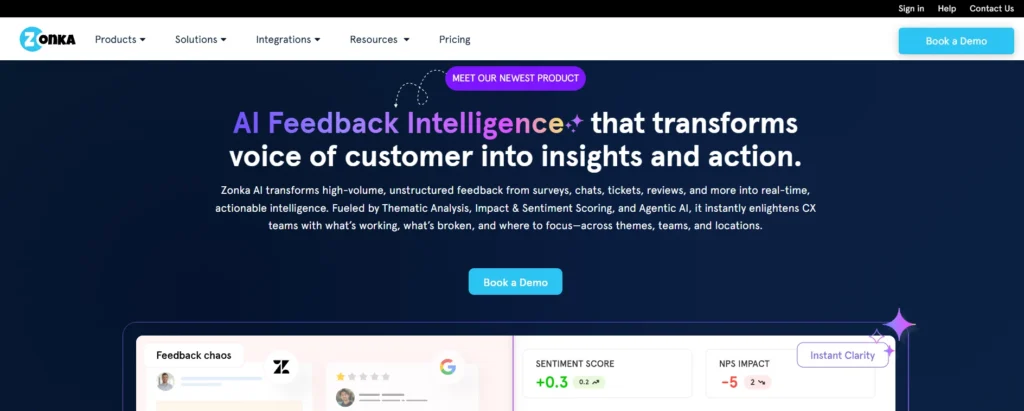
Zonka Feedback has established itself as a powerful customer feedback and experience management platform designed for businesses that want real-time, actionable insights across multiple touchpoints.
What sets Zonka Feedback apart in 2025 is its strong focus on customer journey feedback. Instead of collecting feedback in isolation, it allows brands to understand how users feel at different stages — from onboarding and in-store visits to post-purchase and support interactions.
Key Strengths
Zonka Feedback supports a wide range of survey types, including CSAT, NPS, CES, and custom feedback forms. These can be deployed across websites, mobile apps, emails, SMS, kiosks, and even QR codes in physical locations. This omnichannel approach makes it especially valuable for retail, hospitality, healthcare, and service-based businesses.
The platform also excels in real-time alerts and analytics. Teams can receive instant notifications when negative feedback is submitted, allowing them to act before issues escalate. Advanced dashboards, sentiment analysis, and role-based reporting make it easy to share insights across departments.
Another notable advantage is its automation capabilities. Feedback can be routed to the right team, integrated with CRMs and help desks, and used to trigger follow-up actions automatically.
Best For
- Businesses focused on customer experience optimization
- Companies needing omnichannel feedback collection
- Teams that want real-time alerts and structured CX analytics
Zonka Feedback is ideal for organizations that see feedback as an ongoing conversation rather than a one-time data collection exercise.
2. SurveyMonkey — Best All-Purpose Survey & Review Platform
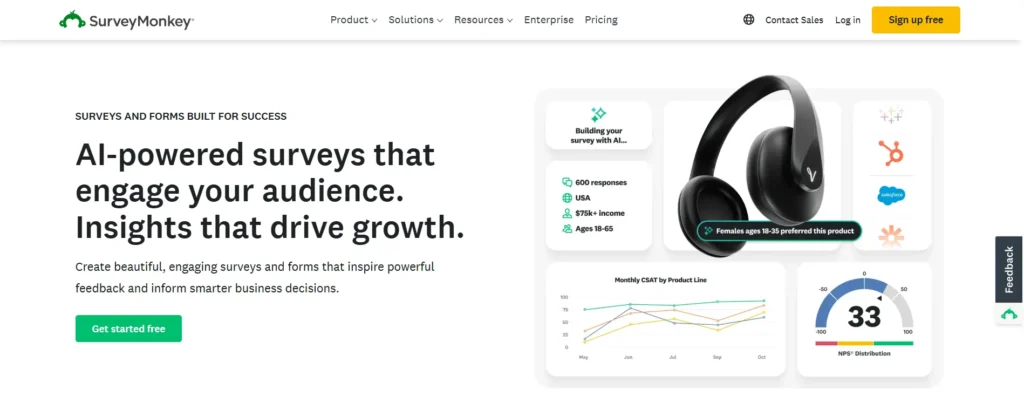
SurveyMonkey remains one of the most widely recognized and trusted feedback tools in the world, and in 2025 it continues to be a go-to solution for organizations of all sizes.
Its biggest strength lies in versatility. SurveyMonkey can be used for customer feedback, market research, employee engagement, brand tracking, academic research, and more — all within a single platform.
Key Strengths
SurveyMonkey offers a massive library of expert-designed templates, making it easy to launch surveys quickly without starting from scratch. Users can customize questions, logic, and branding, or build complex surveys with advanced branching and conditional flows.
In recent years, SurveyMonkey has invested heavily in AI-powered insights, including automated data summaries, sentiment detection, and response analysis. These features help teams move from raw data to insights faster, even without deep research expertise.
The platform integrates with popular tools like Salesforce, HubSpot, Slack, Microsoft Teams, and Tableau, making it easy to embed feedback into existing workflows.
Best For
- Companies needing a reliable, general-purpose survey tool
- Teams conducting both customer and internal research
- Organizations that value ease of use and scalability
While SurveyMonkey may not be the most visually innovative tool, its reliability, depth, and flexibility make it a cornerstone of feedback collection in 2025.
3. Ybug — Best for Visual Feedback & Bug Reporting
What is Ybug?
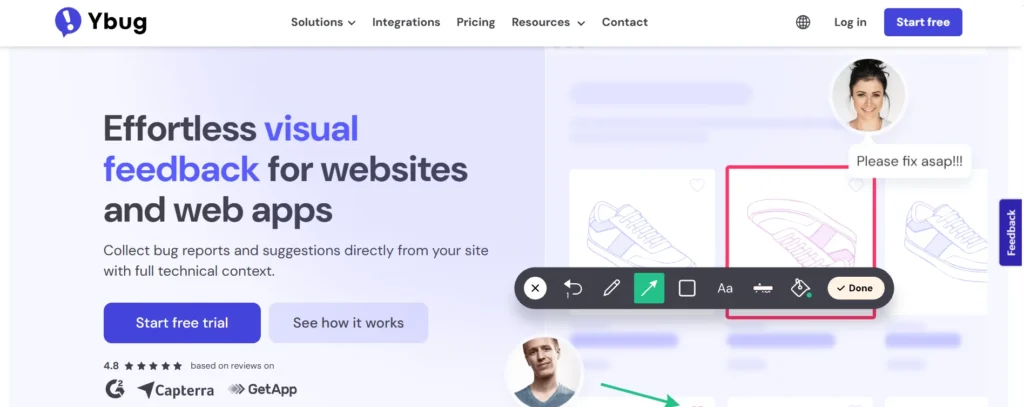
Ybug is a visual feedback and bug reporting tool designed to help teams collect feedback and bug reports directly from websites and web apps. It captures annotated screenshots, user comments, and technical context automatically — so developers, testers, and product teams get all the information they need without endless back-and-forth communication.
It’s tailored for a wide range of use cases, from QA testing and user acceptance testing to customer support and product improvements.
Key Features
Visual & Contextual Feedback
- Users can submit annotated screenshots with comments straight from the site.
- Each report automatically includes technical context like browser, OS, screen size, URL, and JavaScript console logs.
Easy Setup & Use
- Add to your site in under 5 minutes with a snippet or browser extension — no coding expertise required.
- Chrome & Firefox extensions let internal teams capture precise screenshots even on sites not running the widget.
Collaboration & Workflow Integration
- Works with tools you already use, like Jira, Asana, Slack, ClickUp, GitHub, and many others. You can install it in WordPress as a plugin as well.
- Built-in feedback replies help you communicate back to users right from the Ybug dashboard.
Customization & Branding
- Add custom form fields (e.g., priority, feedback type), tailor the widget text and interface, and remove Ybug branding on paid plans.
- Support for multilingual widgets and flexible use in production, staging, or local environments.
Advanced Tools for Teams
- JS error logging captures client-side errors automatically.
- Video recording, file attachments (beta), project permissions, webhooks, and more available on higher plans.
Performance & Compliance
- Lightweight widget loads asynchronously with minimal impact on site performance.
- GDPR-compliant with data hosted in the EU and sensitive fields auto-anonymized.
Pricing Plans
Ybug offers several plans to fit different team sizes and needs — from small projects to larger teams. A 10-day free trial is available with no credit card required.
Free Plan: €0 / month
Basic: €10 / month
Startup: €23 / month
Company: €47 / month
Prices mentioned above apply to the annual billing.
Who Benefits Most from Ybug?
- Developers get actionable bug reports with full technical context.
- Testers & QA can capture issues quickly without manual setup.
- Product managers collect direct feedback from real users to guide decisions.
- Project teams can streamline collaboration and reduce feedback friction.
4. Typeform — Best for Conversational & Engaging Feedback
Typeform has redefined how feedback forms look and feel. Instead of traditional static surveys, Typeform offers a conversational, one-question-at-a-time experience that feels more like a chat than a form.
In 2025, Typeform remains a top choice for brands that care deeply about design, engagement, and response quality.
Key Strengths
Typeform’s biggest advantage is its user experience. Clean visuals, smooth animations, and intuitive flows lead to higher completion rates compared to standard forms. Logic jumps and personalization allow questions to adapt dynamically based on user responses.
The platform integrates with hundreds of tools, including CRMs, marketing automation platforms, and analytics tools. It’s often used for customer feedback, onboarding surveys, lead qualification, and brand research.
Typeform has also expanded its analytics and collaboration features, making it easier for teams to share insights and iterate quickly.
Best For
- Brands focused on design and user engagement
- Marketing teams collecting qualitative insights
- Companies that want higher survey completion rates
Typeform is ideal when how you ask questions is just as important as what you ask.
5. Medallia — Best Enterprise Customer Experience Platform
Medallia is a heavyweight in the customer experience space, built for large enterprises that manage complex, multi-channel customer journeys at scale.
In 2025, Medallia continues to lead in experience management (XM), combining feedback, operational data, and AI-driven insights into a unified platform.
Key Strengths
Medallia collects feedback from virtually every touchpoint — digital, in-store, contact centers, mobile apps, and more. What makes it powerful is its ability to connect feedback with operational and behavioral data, creating a holistic view of the customer experience.
Advanced AI analyzes sentiment, emotion, and intent across structured and unstructured data, helping organizations predict churn, identify root causes, and prioritize actions. Medallia also supports role-based dashboards, governance, and enterprise-grade security.
Best For
- Large enterprises with complex CX needs
- Organizations managing multiple brands or regions
- Companies investing heavily in experience transformation
While Medallia is not designed for small teams or quick setups, it is unmatched in scale, depth, and strategic impact.
Final Thoughts
The best customer feedback and review tool in 2025 depends on your goals, team size, and workflow. Some platforms excel at high-level experience management, while others shine in usability, design, or developer-focused feedback.
- Zonka Feedback is ideal for real-time CX insights across channels
- SurveyMonkey remains the most versatile all-purpose survey platform
- Ybug bridges the gap between user feedback and product execution
- Typeform turns feedback into engaging conversations
- Medallia leads enterprise-grade experience management
In a competitive digital landscape, listening to users is no longer optional but choosing the right way to listen can make all the difference.
For more insightful articles check out our website.